


|
|
|
|
 | ||||||||||||||||||||
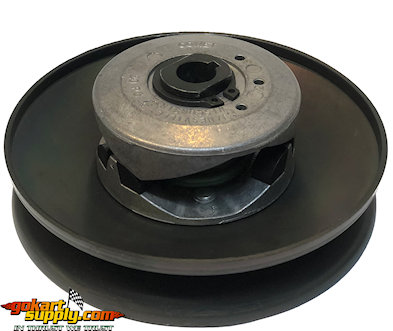 | ||||||||||||||||||||||||||||
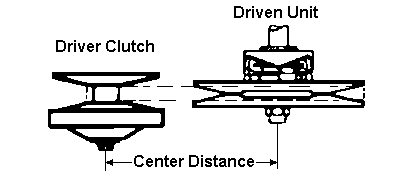
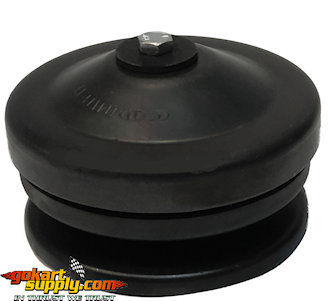
The Symmetrical Type Comet Industries 20 Series uses a 3/4" top width belt that's angled the same on both sides.. The belt mass lends substantially to the driving ability of the system especially in cases where added torque ability is required without danger of slipping the belt. The belt mass of 3/4" top width is especially helpful in applications of low speed, added power requirements such as tractor mowers, off road dune buggies, mini bikes, ATV's, and go karts. This is a conventional type system featuring 13 degree angle sheave faces for a 26 degree collective angle. Driven Units are mounted with torque sensing cam device inboard. Movable sheaves (driver and driven) operate opposite each other. Driven units are available with either 6" or 7" diameter sheaves.
How does a Comet torque converter work? The drive clutch is activated by centrifugal force from the engine crankshaft. The moveable sheave of the clutch is forced in as the RPM of the engine is increased. This contacts the drive belt. The drive belt will then be forced to a larger diamter within the clutch sheaves, thus pulling it to a smaller diameter within the driven unit sheaves. The moveable sheave of the driven unit is forced out, allowing the belt to seek its smaller, high speed ratio diameter. As this happens, the speed from the engine transferred to the final drive is increased.
IMPORTANT! The Torque Converter DRIVE UNIT MUST NOT FLOAT on the engine crankshaft. It must be bolted tight against the crankshaft shoulder. Recommended Torque for bolt: 24 ft. lbs. To 30 ft. lbs. MAX.
The crankshaft and the jackshaft must be parallel at all times.
Drive Clutch Engagement Range: MIN: 1200 RPM -- MAX: 3100 RPM
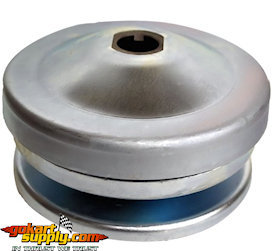
Visit the Trouble Shooting Page for more information on malfunctioning Comet Torque Converters. Belts eventually wear over time but a damaged or torn up drive belt always indicates that a problem exists with the system. Only replace your drive belt after the problem has been corrected. Components must be clean, lubricated and perfectly aligned to function properly.
 |
 | ||||||||||||||||||||
 | ||||||||||||||||
 | ||||||||||||||||||||
 | ||||||||||||
 | ||||||||||||||||
 | ||||||||||||||||
Inspect the torque converter on a regular basis for dirt, frayed belts and any other potential problem obvious from a visual inspection. Always service units before each season. Maximum service interval recommended is each 50 hours of operation.
Drive and driven pulleys should be parallel. Friction faces must be smooth and free of dirt, corrosion, oil or grease. Belt must be dry, straight, and free of cracks, breaks and uneven wear. Operating the vehicle in a dusty environment will require more frequent servicing.
Indicators of a torque converter system requiring cleaning and lubrication are erratic or jerky engagement upon acceleration and a tendency to apparently "lock" into a particular speed (a second cause of jerky engagement is an excessively loose drive chain). If either one of these conditions exist service the unit immediately. Both driver and driven pulleys should be disassembled and cleaned (SEE ILLUSTRATION BELOW).
Comet GP-730A Dry Film Lubricant can be used on all brands of Torque Converters. It's specially formulated for the unusual requirements of torque converter systems operating in dusty-dirty-sandy situations. Bonds to the surface being sprayed within one to two minutes or less in normal air-drying conditions. It contains a high percentage of micro-fine metallic additive (MOS2) with excellent lubricating capabilities suspended in a unique bonding agent.
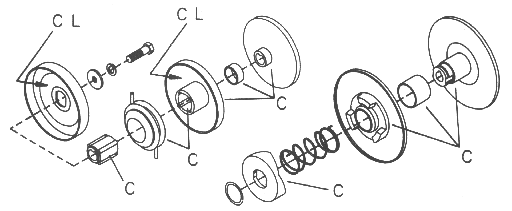
C = CLEAN - L = LUBRICATE
Factory Authorized Distributor
|
|
Page Last Updated: 05/02/2024
© 1997-2024 Go Kart Supply, Inc